
Talk to
your agents.
声で、エージェントに仕事を。
Delegate work to Claude Code and Codex by voice, from your phone — in the car, on a walk. pitupitu starts the sessions on whichever of your machines fits, watches them, and tells you when they finish or need you.
Closed beta · 30 free minutes of talking. No card. Setup takes two commands.
Your agents, in your pocket. And on your desk.
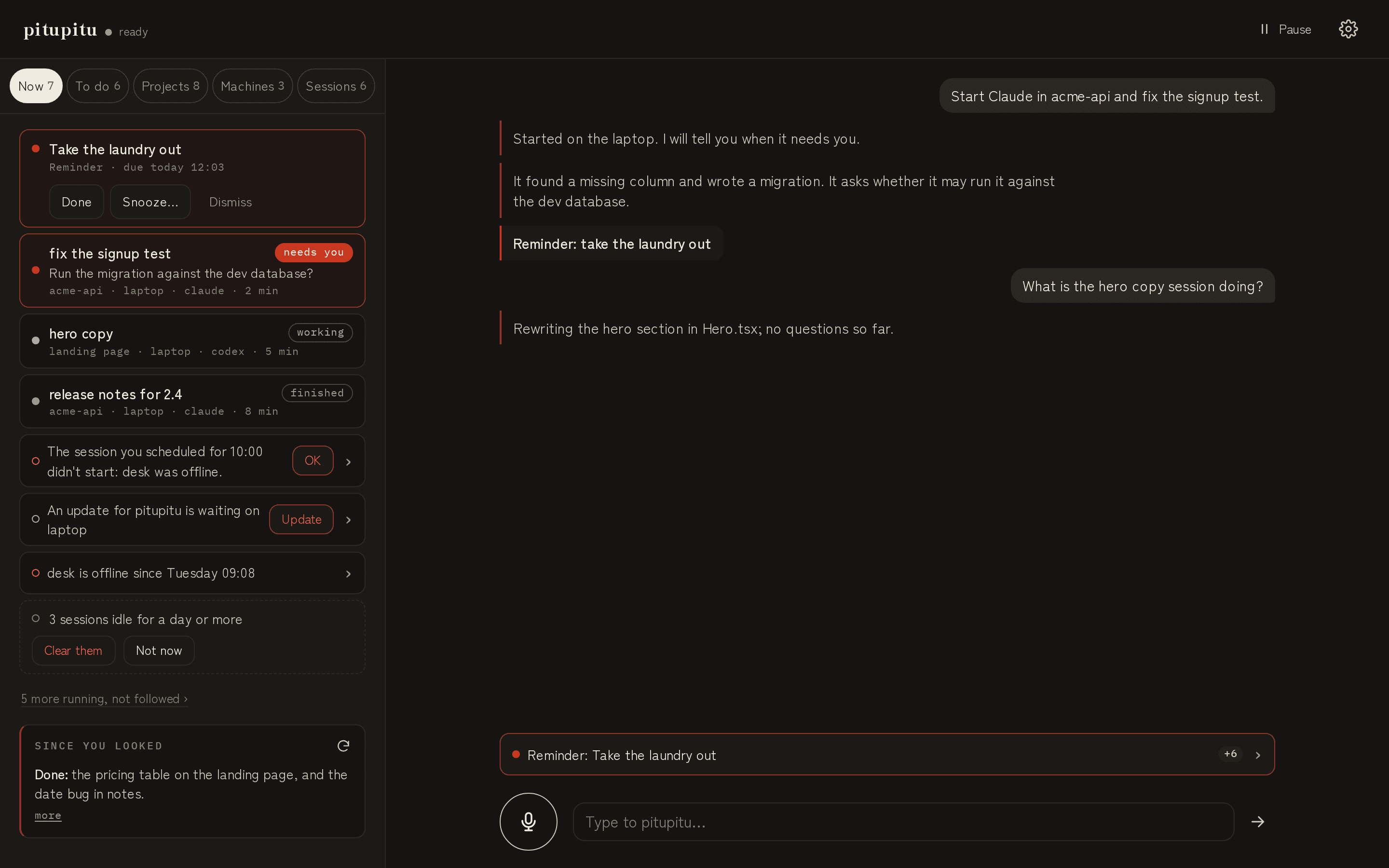
One screen that says what needs you, every session on every machine, and a terminal you can type into from the train. The same page on a wide screen puts the work beside the conversation.
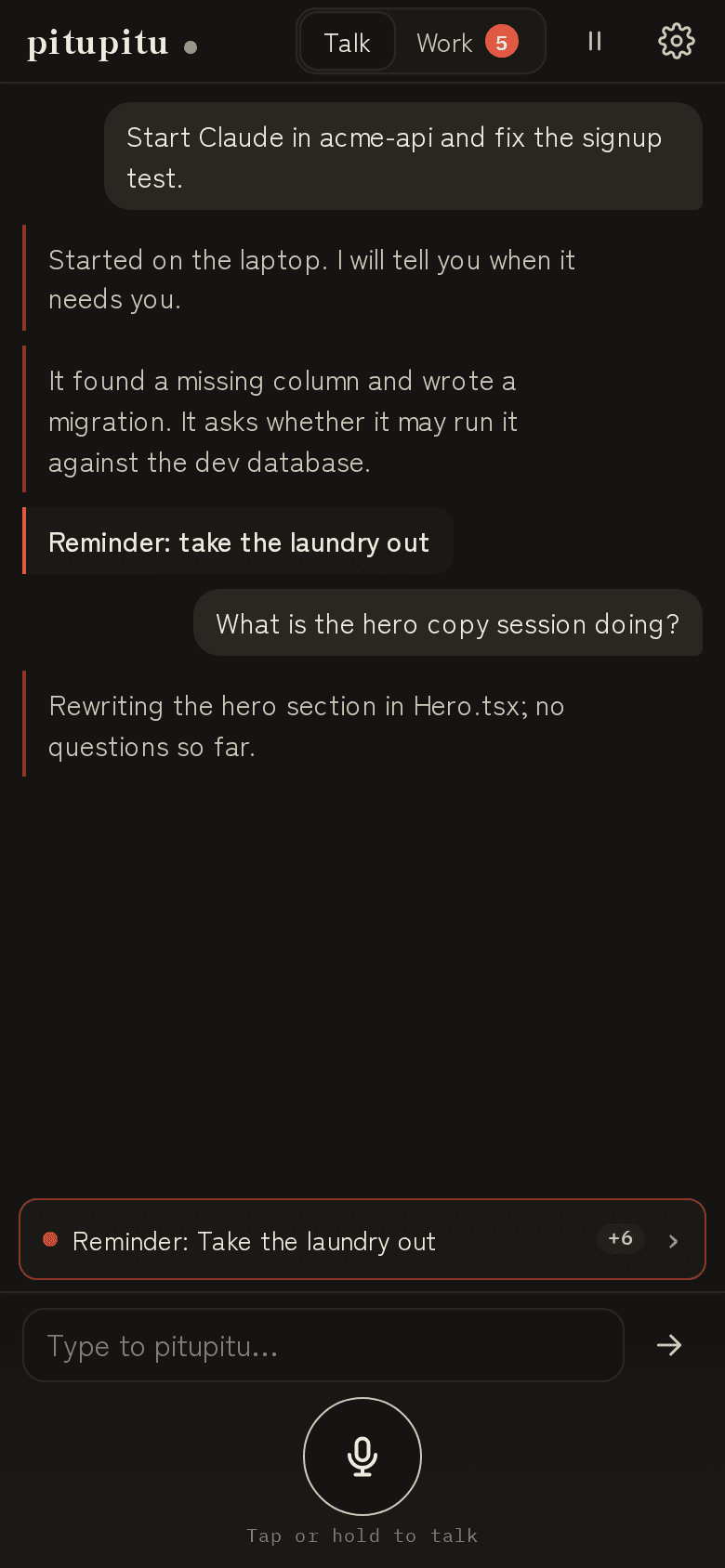
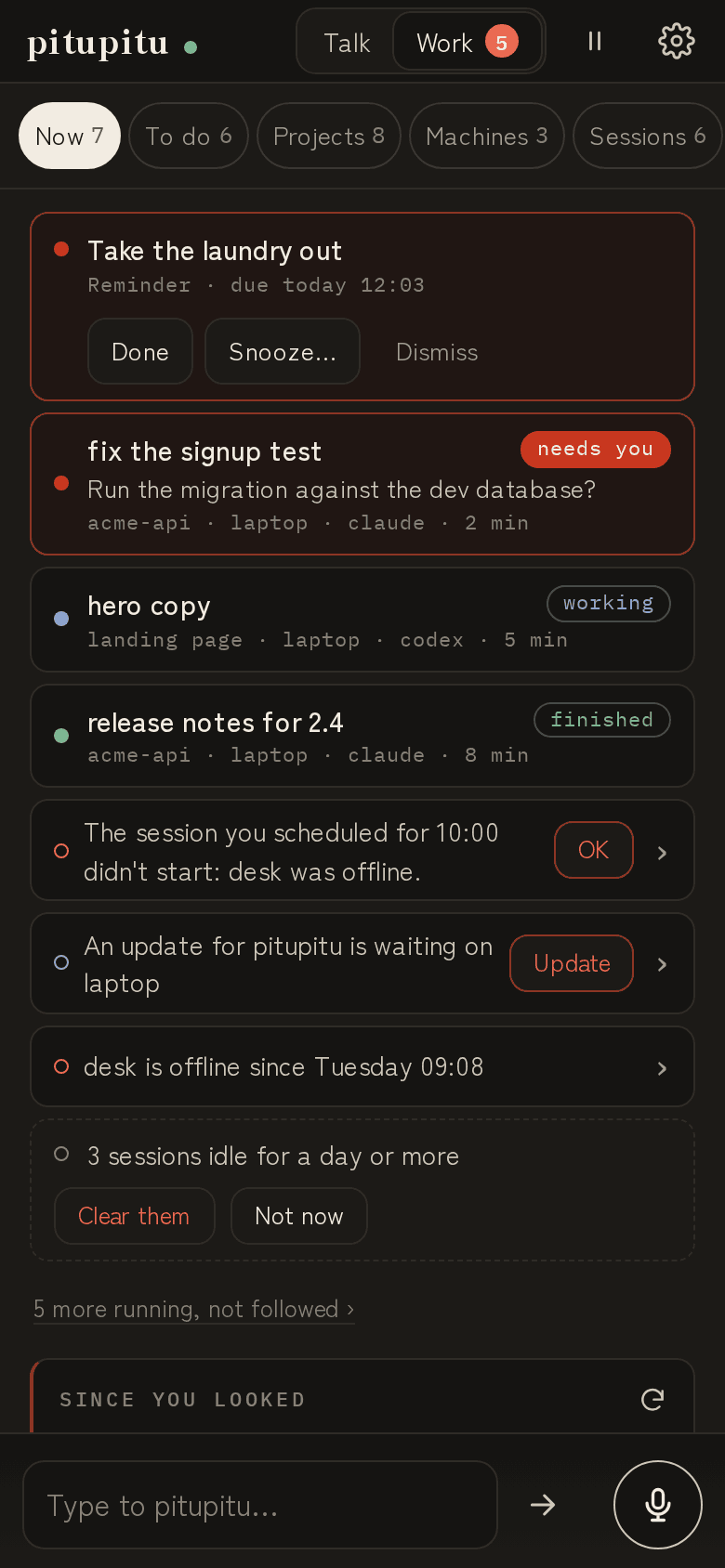
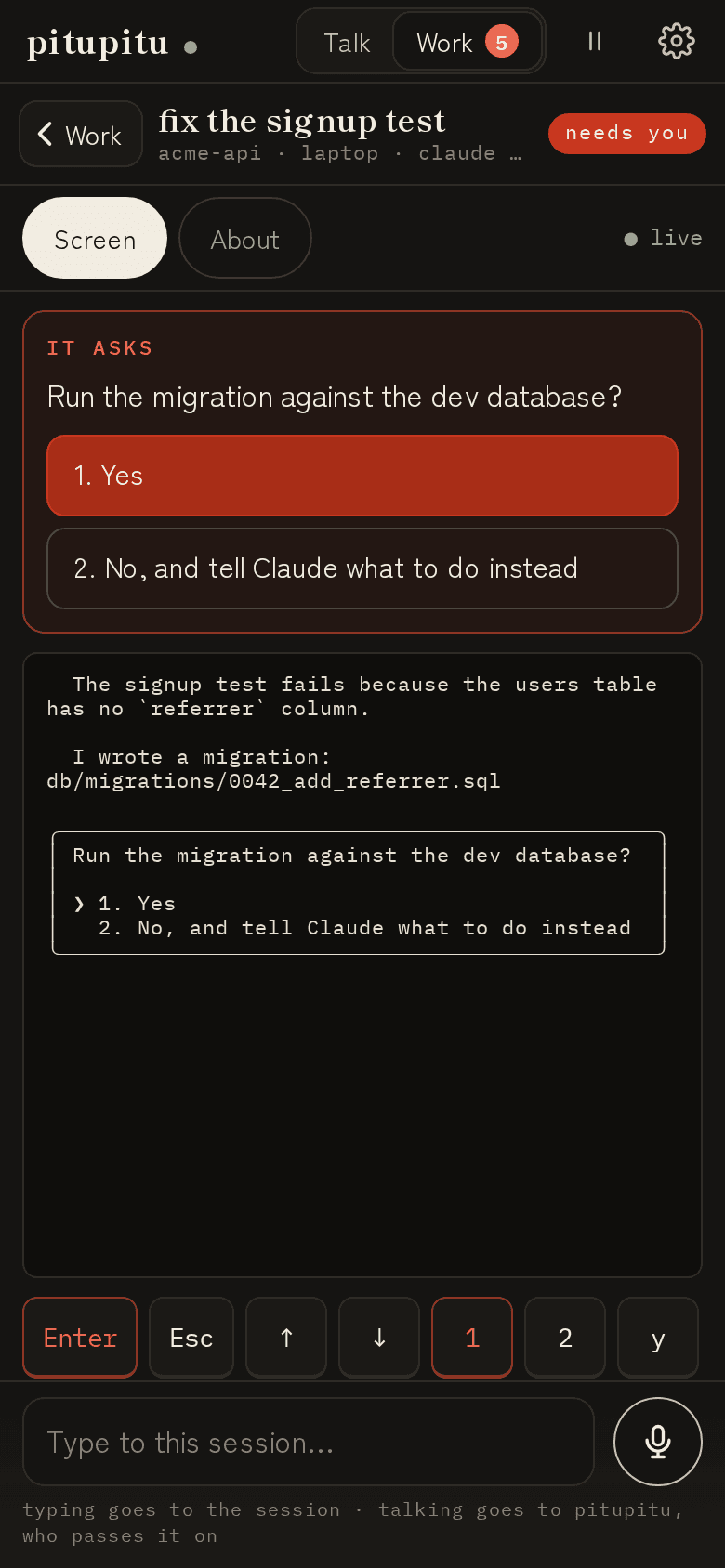
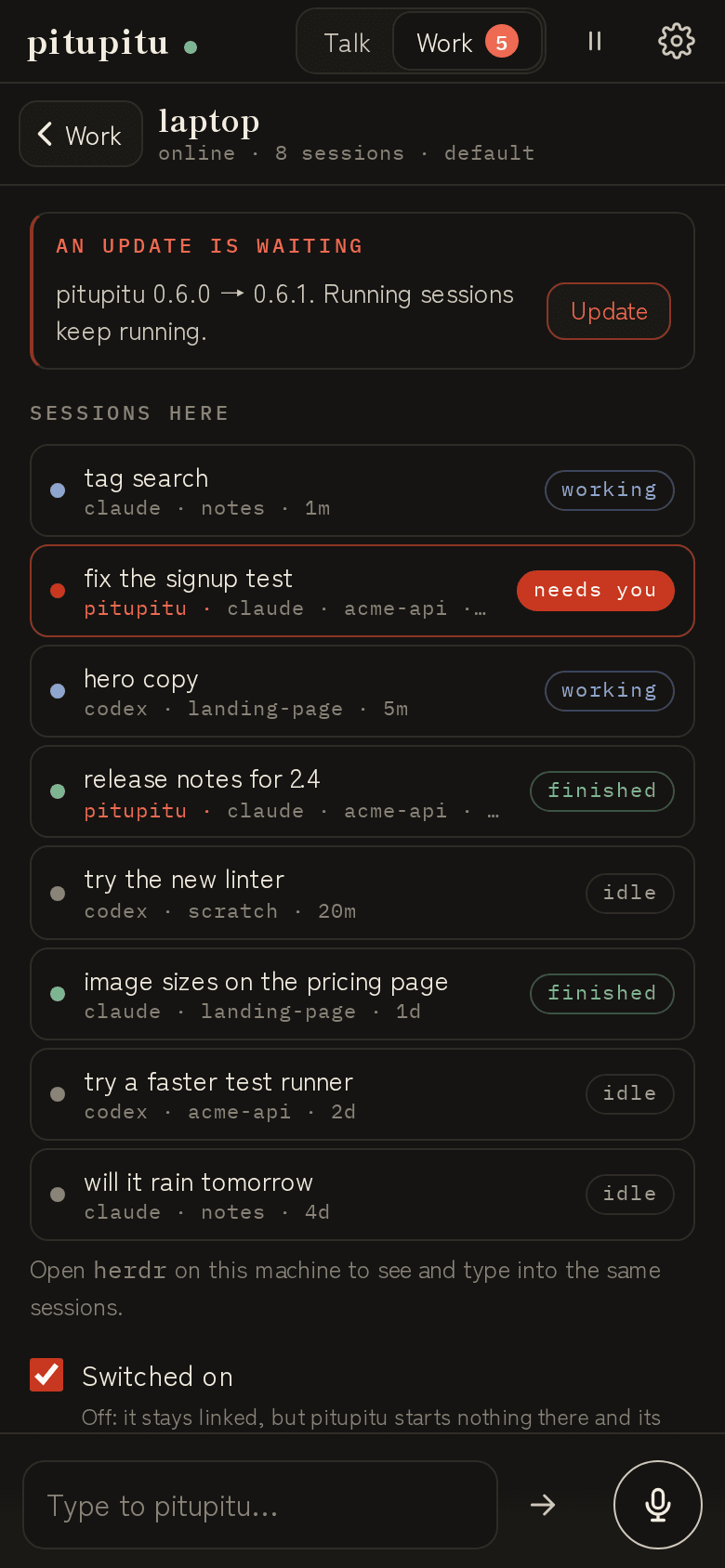
Dictation is not conversation.
Like the operators who once patched calls through, pitupitu sits between you and the lines. You talk; it connects the right agent, keeps every line in view, and only rings you when something needs you.

線をつなぐのは、声。
Answers in well under a second, and you can interrupt it mid-sentence. It reports in the pauses, never over you.
Turns what you say into agent sessions on the right machine, in the place you name, and turns what the agents do back into short spoken updates.
Two commands, then talk.
- 一Install
$ curl -fsSL https://pitupitu.chat/install | shA small open-source connector on each machine where your agents run. It runs them in herdr, the open-source terminal multiplexer, and installs herdr when it is missing. With Homebrew:
brew install klarluft/tap/pitupitu. - 二Link
$ pitupitu setupPrints a code; approve the machine from any screen. No keys to paste. It finds the agents you have and the projects you worked in lately.
- 三Talk
$ open https://pitupitu.chat/appOn your phone or desktop, say what you want done and where. Lock the phone; announcements still reach your headphones.
You talk. The lines light up.
Open herdr at your desk and you see the same sessions, live; ones you start there yourself show up here too. Worktrees, branches and reviews stay between you and the agent.
We carry the voice. The work stays yours.
pitupitu drives the official Claude Code and Codex CLIs exactly as you would: unmodified, under your own logins and permission settings, in herdr on your machine. It never reads or proxies their credentials, and your subscription only ever does your own work. What we run is the voice: speech in and out, and the model that holds the conversation.
Stopping a working session or answering an agent's dialog waits for a spoken yes. The check is in code, not in the model's hands.
The conversation and what you asked pitupitu to remember are kept, so you can pick up where you left off; clear them any time. We keep your email, a hash of each machine's key and the seconds you talked.
Pay for the minutes you talk.
Enough to find out whether it fits your day. Use them within 30 days.
A month of daily commutes. Unused minutes carry over one month.
For a heavy week. Top-up minutes last 12 months.
pitupitu is in a closed beta: plans and top-ups open soon, and until then the minutes are on us. Minutes count while you talk and while pitupitu speaks. Plan minutes are spent before top-up minutes, so the ones that lapse first go first. There is no unlimited plan: every minute of speech is paid for, and we would rather tell you that than hide it.
- Which agents?
- Claude Code and Codex, the official CLIs under your own logins and subscriptions, and anything herdr can start (Gemini CLI, OpenCode and more). pitupitu only types and watches.
- Do I need herdr?
- pitupitu runs your agents in herdr (herdr.dev), the open-source terminal multiplexer, and installs it for you if it is missing. Open herdr on that machine and you see the same sessions your phone drives, and can type into them.
- More than one machine?
- Link each one. pitupitu knows which projects are where, asks when it can't tell, and remembers your answer. Say "remember that client work goes on the laptop" and it will.
- Why minutes and not tokens?
- The expensive tokens are the agents', and they run on your own setup. What we pay for is speech, while you talk and while pitupitu answers, so that is what you pay for.
- Do I need to keep the page open?
- Lock the phone and keep your headphones in: announcements still reach you. Anything that happened while you were away is told when you're back.
- Is it open source?
- The connector, which is all that runs on your machines, is: Apache 2.0, at github.com/klarluft/pitupitu. Your agents can set it up for you with its skill (pitupitu --skill).